

Queer Relationship & Couples Therapy in Vancouver
Relationship therapy for queer, LGBTQ+, gay, lesbian, and ethically non-monogamous couples with phil di loreto, RCC. You won’t need to explain or justify your relationship here.
Couples Therapy That Starts from an Affirming Place
Most couples therapy was built around a default relationship model: two people, two different binary genders, following a fairly predictable relationship arc. That model doesn’t fit every relationship, and for LGBTQ+ and ethically non-monogamous couples, it can create extra friction in the therapy room, time spent educating your therapist on your relationship structure instead of actually doing the work.
At Here We Are Therapy, queer couples therapy starts from a different place. Your relationship structure, your identities, and your community context are already understood. phil di loreto, RCC, brings both professional training and lived experience within Vancouver's queer community to this work.
This page is specifically for LGBTQ+ couples, including gay and lesbian partnerships, bisexual and pansexual relationships, trans and non-binary partnerships, ethically non-monogamous (ENM) and polyamorous relationships, and any other configuration of queer relationship that does not fit a heteronormative frame.
For general couples therapy, including straight and mixed-orientation couples, see the main relationship and couples therapy page.
What Queer Couples Therapy Can Help With
Queer relationships often bring many of the same relational challenges to therapy that any couple does: communication breakdowns, conflict patterns, shifts in intimacy or connection, navigating life transitions, and wanting to build something stronger before problems compound.
Queer partnerships also navigate dynamics that are specific to their experience, including the impact of minority stress on relationships, navigating coming out at different stages or speeds as a couple, family-of-origin tension and rejection, dynamics that arise in non-monogamous structures, and the absence of established scripts for what a healthy queer relationship looks like.
Therapy here addresses both layers, the relational and the community-specific, without ever treating the queer or ethical non-monogamy context as the problem to be solved.
Common reasons queer couples seek therapy include:
Recurring conflict or communication patterns that feel stuck
Navigating ethical non-monogamy agreements, boundaries, or relationship transitions between monogamy and non-monogamy
Differences and challenges in navigating sexual identity
Reconnecting after a period of distance or disconnection
Processing the impact of external stressors on the relationship
Building stronger communication and conflict skills before things escalate
Working through a significant rupture or breach of trust
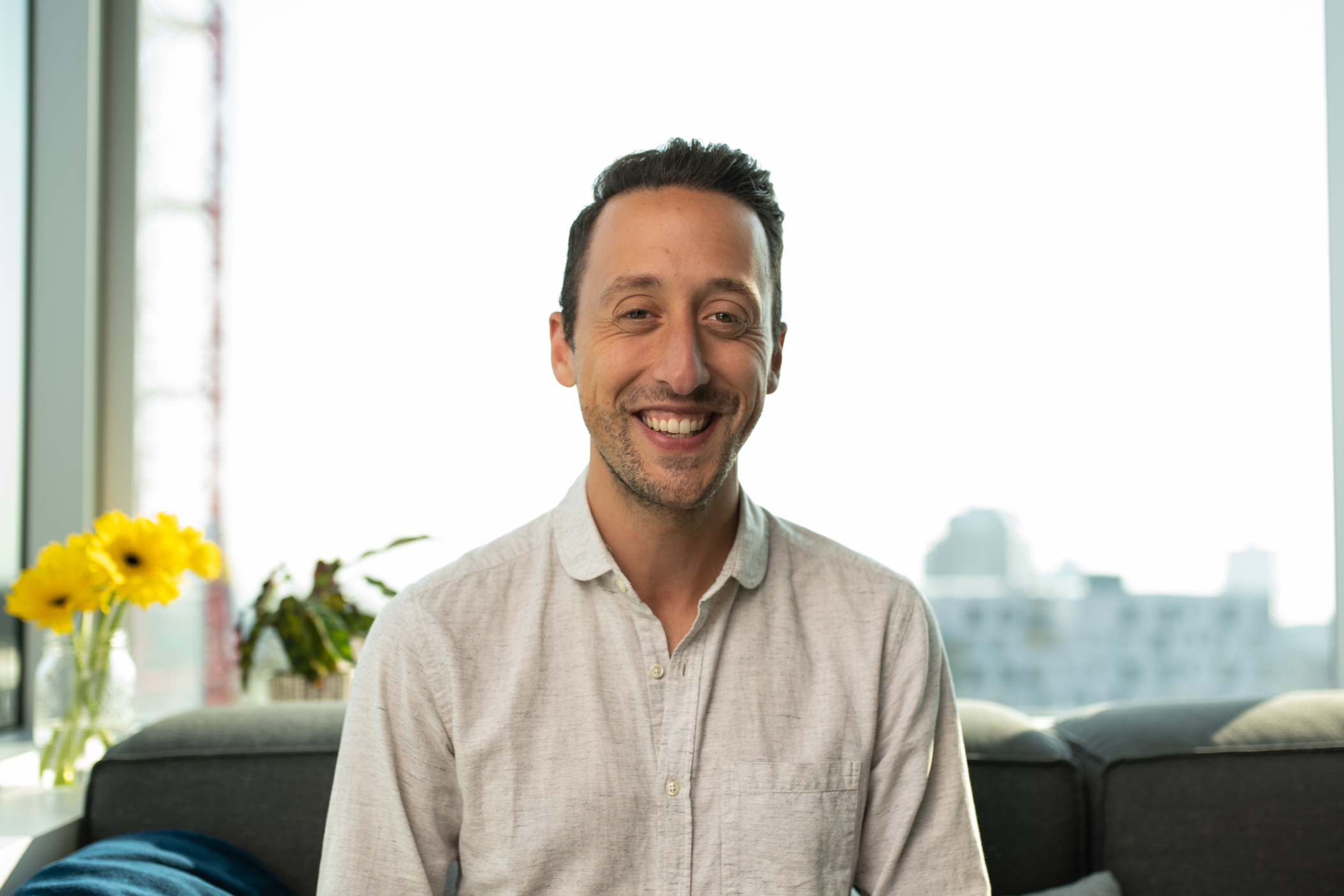
How phil Approaches Queer Couples Therapy
Phil di loreto, RCC, uses two evidence-based frameworks as the foundation for couples work: the Gottman Method and Emotionally Focused Couples Therapy (EFT).
The Gottman Method is built on decades of research into what makes relationships work. It focuses on identifying the specific interaction patterns that strengthen or erode a relationship and gives couples concrete tools for communication, repair, and rebuilding connection. It’s structured and practical without being clinical or cold. Although the Gottman Method is founded on traditional relationship structures, many of their tools and ways of understanding long-term partnerships are helpful in the context of queer partnerships as well.
Emotionally Focused Therapy works at the level of emotional experience and attachment. It helps partners identify the underlying feelings driving conflict and disconnection, and supports them in expressing those feelings to each other in ways that build safety rather than escalate. EFT is particularly effective for couples where the conflict has an emotional distance or withdrawal pattern underneath it. Research on EFT has been conducted on queer relationships with positive results on its efficacy amongst this population.
Both approaches are applied with an affirming and culturally informed lens. Phil adapts the frameworks to fit your specific relationship structure and identities, not the other way around.
Phil holds a Master of Counselling from City University of Seattle and is a Registered Clinical Counsellor (RCC) with the BC Association of Clinical Counsellors.
What to Expect from Queer Relationship & Couples Therapy at Here We Are Therapy
1
The process begins with an initial session that includes all partners. This first meeting focuses on the relationship's history, each person's intentions, and what you are hoping to work toward together. The Gottman Relationship Checkup is shared with all partners to complete.
2
This is followed by one individual session per partner. These sessions give each person space to share their perspective on the relationship without an audience, and help phil understand each person's individual context, history, and needs.
3
From there, relationship sessions proceed at a rhythm that fits your goals, typically biweekly. Sessions are extended to 75 minutes. Telehealth is available across BC and ON for those who prefer to work remotely or are not based in Vancouver.
-
You develop concrete tools for expressing needs, responding to your partner under stress, and working through disagreements without escalation or shutdown.
-
Therapy helps you identify the cycles that feel stuck and the insecurities that are driving them on both sides, making it possible to shift them.
-
For many couples, therapy creates a space to rebuild trust, deepen intimacy, or reestablish a sense of closeness that has eroded. For queer relationships specifically, it can also be a space to build the kind of intentional relational structure that was never modelled for you.
Queer Relationship Therapy Outcomes
-
The methodologies and tools are largely familiar. The difference is the starting point. In queer therapy here, you don’t need to spend session time explaining your relationship structure, your identities, or what it means to navigate queer community dynamics. Phil already understands the context making this a space where you can feel seen for your authentic self. This frees up more of the therapy time for the actual relational work.
-
No. Mixed-orientation couples, couples where one partner is trans or non-binary, and couples navigating ENM structures where partners have different identities are all welcome.
-
Yes. Here We Are Therapy is explicitly affirming of ethically non-monogamous and polyamorous relationship structures. Phil works with couples and relationship configurations of all kinds. Sessions can include two partners or can be adapted for a triad or polycule where that is relevant.
-
There is no fixed number. Some couples work through a specific issue or transition in eight to twelve sessions; others find longer-term support more useful. Phil will discuss a recommended approach after the initial assessment sessions.
-
As a Registered Clinical Counsellor (RCC), phil's services are covered by many extended health benefit plans. Coverage varies by insurer and plan. We recommend checking your policy directly.
-
Yes. Telehealth sessions are available across BC and ON for couples who prefer to work remotely or are not based in Vancouver.
Common Questions
Check out our FAQ for more info!
Book a Queer Couples Therapy Consultation in Vancouver
phil di loreto, RCC, is currently accepting new couples and relationship clients in Vancouver, with telehealth available across BC and ON. The first step is a free 20-minute consultation to discuss your situation and whether working together feels right.
Here We Are Therapy serves clients across Vancouver, including the West End, Kitsilano, and Commercial Drive.