
Underneath the Fight: What Queer Couples Are Really Navigating
Most couples come into therapy wanting to communicate better. Learning how to talk to each other, how to recognize when a conversation is escalating, how to say the hard thing without it landing as an attack, these are real and valuable skills. The Gottman Method, which I draw from in my couples therapy work, offers some of the most research-grounded tools available for exactly this: understanding how criticism and defensiveness show up and quietly erode connection over time, recognizing when your nervous system is flooded and you've lost the capacity to have a productive conversation, and learning practical ways to communicate that don't push each other further away.
Here’s the snag: you can know every technique and still find yourself unable to say the true thing when you're sitting across from your partner. That's not a skill deficit. That's a safety problem. Everyone arrives in a relationship carrying a whole world with them. Their own history, their own emotional wounds, and their own learned ways of protecting themselves when things feel uncertain. When it comes to queer relationships, there are additional layers that therapists need to integrate; that's what this post is about.
What the Fight Is Usually About
There's a phrase we couples therapists often use: it's not about the dishes. The conflict that pulls people in, the argument that keeps cycling back, the thing that felt unforgivable last Tuesday; it's rarely actually about what it appears to be on the surface.
One partner shuts down. The other pushes harder. Someone goes quiet for days. Someone says something they don't mean. From the outside, it looks like a conflict about cleanliness, or punctuality, or a facial expression that puts you off. Underneath every surface argument is someone who doesn't feel safe. Someone whose nervous system is running an old program, written long before this relationship existed, that says: there’s something I’m feeling insecure about, and I need to protect myself.
This is the foundation of Emotionally Focused Therapy (EFT), the approach I integrate into my couples work with the Gottman Method. EFT doesn't try to teach better arguing techniques. It goes underneath the argument to find what's actually driving it. The core unmet emotional need, the attachment fear, the moment where one person needed to feel seen and didn't. When couples can start to see each other from this place, something genuinely shifts. What I've found working with queer couples is that getting underneath the surface requires understanding the particular experiences that shaped how safe it has ever felt to be fully known. For LGBTQ2+ people, that history has a specific texture.
What We Learned Before We Ever Fell in Love
I came out as a gay man in my mid-twenties. And while that moment mattered, coming out is rarely a single event. It's a process that often starts long before you have language for it and continues long after you've told the people in your life about your sexual identity. This applies to people who had the courage to live openly from a young age, to people who came out later in life, and to people who are still in the process of understanding what their sexuality or identity means to them. Every timeline is different. A consistent trend I’ve seen across those timelines is the experience of learning, at some point, that certain parts of you needed to be managed, covered, masked in the world to feel safe.
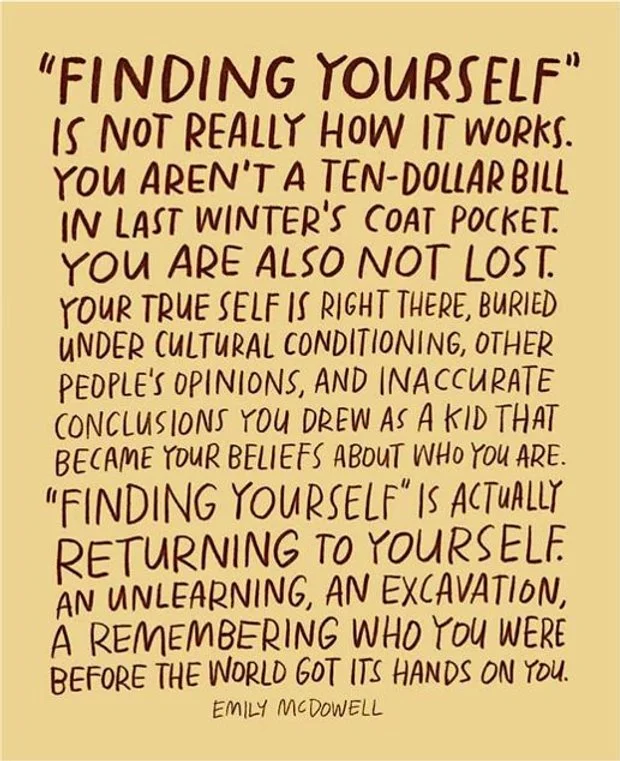
I have early memories of being completely unselfconscious. Playing with barbies, wearing my mom's purse around the house, feeling free to be fully myself in the way small children are before the world starts teaching them to hide these parts of themselves. Reflecting on my own experience, it was a quiet accumulation of microaggressions, the casual homophobia woven into social dynamics where no one intended harm, but the impact was real regardless. For many queer people, it's not quiet at all. Whether it’s slurs, rejection from people they loved, or cruelty from environments that were supposed to be safe. This is emotional wounding, and it changes how a person learns to move through the world, how they learn to stay safe.
What gets absorbed through those experiences is a set of deeply ingrained lessons about what's safe to show and what needs to stay hidden. Heteronormativity, cisnormativity, mononormativity, the patriarchy: these oppressive systems poison all of us from the outside in. They shape what we believe we deserve, what we think a relationship is supposed to look like, which emotions are acceptable and which ones make us a problem. Without addressing these emotional wounds, they unconsciously follow us into our adult relationships with friends, coworkers, and intimate partners.
Two Ways It Shows Up in Relationship
The impact of growing up inside these systems doesn't look the same for everyone.
For some people, it shows up as a constant low-level scanning (i.e., hypervigilance). Reading their partner's tone carefully before deciding how honest to be. Holding back the more vulnerable thing they actually want to say because they're not quite sure it will land safely. Watching for signs that they're too much or not enough. This is a skill that once served them in environments where being fully seen genuinely wasn't safe. However, as adults in an intimate relationship, that same protective instinct that made sense then can quietly prevent someone from being fully known now.
For others, it looks quite different. They've done the work of claiming their identity, stepping into queer community, living that fully and visibly. And that outward fullness can coexist with something quieter underneath that's harder to access, a part that learned early to stay in motion, to lead with confidence and pride, because the particular vulnerability of being truly known by one person in an intimate relationship is a different kind of exposure than showing up boldly in the world. But even people who have fully stepped into themselves can find that intimacy, the slow, close, daily kind, brings up something that public pride doesn't touch.
To clarify, living out loud isn’t a problem. It's something I celebrate and actively encourage. You deserve to live your best life and never apologize for your sexual identity and how you present in the world.
When two people with their own versions of these patterns are in a relationship, and neither has the language to say "this is my old fear talking," the collision can be genuinely confusing. These are our insecurities seeping their way into the relationship and creating disproportionate fights, inexplicable disconnection, and ongoing cycles of hurt.
The Loneliness Inside the Relationship
What I find again and again in couples work is that the core of what brings people in isn't conflict. It's loneliness. Not the loneliness of being alone, but the particular loneliness of being in love with someone and still not feeling fully seen. They just don’t get it.
For queer folks, many of us spent a significant part of our lives not being fully seen by the people around us. Learning to hide, to perform, to give people a version of ourselves that felt safe enough to offer, and for some, the covering ran even deeper than that: not feeling safe enough to be honest with themselves about who they were. Keeping their own identity at arm's length because acknowledging it fully felt like too much to hold alone. That is a particular and profound kind of loneliness, and it leaves a mark.
The need to feel truly seen is not unique to queer people. But the hunger for it can run differently when you've spent so much of your life learning to make yourself invisible, or at least manageable, to the people you needed most. When you finally find a relationship where being fully known feels possible, the stakes feel enormous. If that relationship starts to feel like another place where you can't quite be seen, where your deepest needs for emotional safety are going unmet, it can reactivate something very old and very painful. So often, this isn’t because your partner doesn't care but because neither of you has found a way to see and share the depth of insecurity that is present in the relationship. Sadly, it’s entirely possible to love someone deeply while feeling profoundly lonely inside that love.
What if there was a different way? What would it be like to sit down with your partner and actually speak about these insecurities you’re carrying into the relationship instead of circling around the surface-level argument, getting defensive, withdrawing or pushing to prove a point? To share what’s underneath, the hurt that you’re carrying, maybe since you were a kid, from friends who didn't understand you, from family who couldn't quite see you, from a world that asked you to be smaller or different or less. What would it feel like to say that out loud, and to have your partner reach over and hold your hand while you did?
What would it be like to tell the person you love what you're actually scared of? Not the surface fear, but the one underneath it. That a part of you feels lonely. That a part of you feels undesirable. That there's a part of you that still wonders, quietly, whether you are truly worthy of the love you're in. These are the fears that don't get named in most conversations, and they are the ones that are actually running the show.
What the Work Actually Looks Like
The most meaningful moments in couples therapy are when someone manages to say the true thing. This is where EFT and the Gottman Method weave together in a way I find genuinely useful. Gottman's framework helps couples understand the communication mishaps and patterns they're caught in, how contempt, criticism and stonewalling become habits that cause disconnection, and gives them concrete tools to introduce new communication patterns. EFT goes a layer deeper, to the emotional experience driving the pattern in the first place. One approach gives you the map and the practical tools. The other helps you understand why you keep ending up in the same place despite your best efforts. Together they create something more complete than either does alone.
In the Gottman Method, there's a concept called love maps, the idea that truly knowing your partner means understanding their inner world. Not just their preferences or habits, but the experiences that shaped them, so you can understand how to love them better. From here, you start to see that the things that have been landing as rejection or indifference aren't always intentional. They're the echoes of old emotional wounds. When you can see that, you can begin to hold each other differently, more gently, with a lot more compassion for what the other person has been carrying.
Getting there requires vulnerability, which can feel terrifying for a lot of people, especially when you've learned that exposing your tender heart can be dangerous. It takes courage from both people to show up for that kind of conversation. In couples therapy, we create a space where that courage has somewhere safe to land, with tools and support for how to actually have these conversations together in a way that brings you closer rather than further apart. For queer people who have spent so much of their lives learning to hide, that kind of meeting, of being truly known by the person you love, can feel like something you didn't fully know you were allowed to have.
A Note Before You Go
Brené Brown tells us our stories deserve to be shared only with people who have earned the right to hear them. People with whom we've built something sturdy enough to hold the weight of what we're carrying. I think about that a lot in the context of queer relationships, because so many of us have spent so long sharing ourselves with people who weren't ready to receive us. The scar tissue from those experiences doesn't disappear just because we've found someone we love.
My hope for you is that you keep uncovering. That you find your way toward feeling safe in this world, safe in your partnership, and surrounded by relationships, whether that's a partner, friends, or family, where you can be truly seen and gently held. That the people in your life earn that place to witness your story, and that you feel the difference when they do.
This post is written with queer couples at the centre, but the experience of feeling unseen, of carrying old wounds into a present relationship, of longing for love that finally feels safe enough to be fully yourself in, isn't exclusive to queer people. If found yourself in this post, this is an inclusive space and I welcome you to reach out for a conversation.
This is work I find genuinely meaningful, partly because I've done my own version of it. I know what it's like to be in a relationship while still figuring out who you are underneath what you were taught to be. I know how disorienting it can be to be uncovering yourself and trying to show up as a good partner at the same time. It's a genuine privilege to be let into the intimate world of a relationship. To be trusted with what hasn't felt safe to say out loud yet. If some of what's described here feels familiar, I'd be honoured to be a fellow traveller alongside you.
When you're ready, I'm here for it.
— phil
